
About the Review
"Every root is a record of where it has been."
The Root System Review exists for the rejection pile. For the poems that make MFA workshops shift in their seats. The work deemed “too visceral,” “too weird,” “not universal enough” by journals hoarding gatekeeping power.
Yes, we center diasporic voices — immigrant, indigenous, border-crossing — because the canon buries us first. But more than that, we excavate anyone breaking concrete. The white poet writing about Appalachian strip mines with the same brutality. The academic dropping the mask to write about their nervous breakdown. The weird, the feral, the unpolished vernacular that won’t behave.
The name comes from the way a root system works: not a single taproot driving straight down, but a network — lateral, adaptive, reaching in every direction at once. If your roots are breaking through pavement, regardless of coordinates, we want the shrapnel. The extraction that bleeds. The poems that can’t find a home anywhere else.
Raw Over Polished
We want the visceral, the weird, the unpolished. The poems that refuse to behave. If your work makes gatekeepers uncomfortable, we want to read it.
Specificity of Place
We are drawn to poems that name things: streets, foods, rivers, relatives. The specific is the universal. Whether you're writing about Appalachia or Kingston, we want the archaeology.
The Body as Archive
We believe the body holds history. We are interested in poems that locate memory in the physical — in gesture, in taste, in the way grief lives in the shoulders.
Formal Courage
We publish poems in every form, but we are especially drawn to work where the form itself is doing something — where the shape of the poem on the page is part of its meaning.
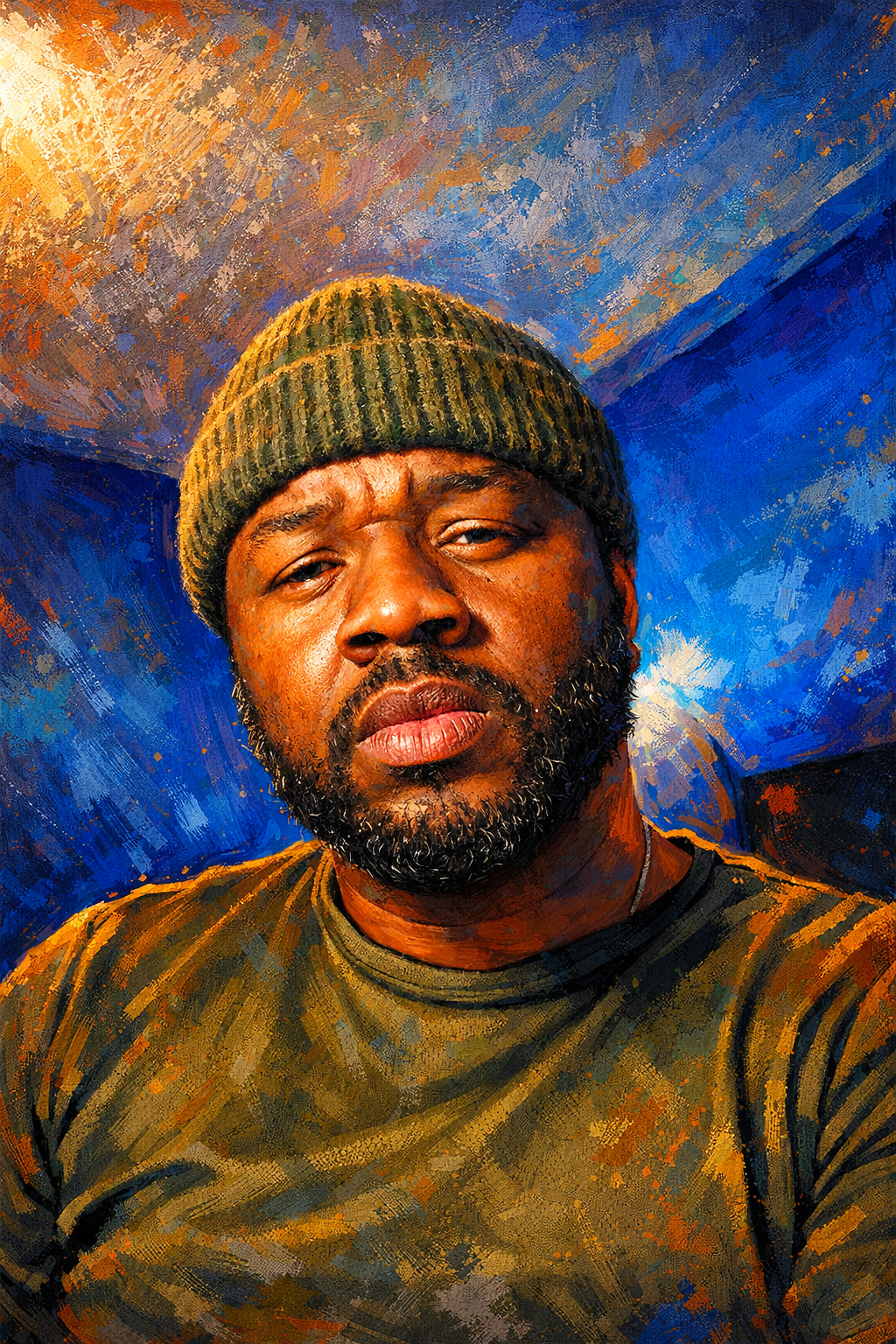
Ramon Carty
A Jamaican-Canadian poet who immigrated at sixteen, Ramon “Ram” Carty excavates diasporic grief from Toronto. He edits red, reads blind, and pays poets because labour is not a hobby. He is also the curator of Museaic Mondays.
I got tired of watching brilliant poets — specifically the diasporic ones, the ones writing like shrapnel extraction — get told their grief was “too specific,” “too raw,” “not universal enough” by journals run by people who’ve never had to translate their own trauma for a white editorial board.
I spent three years curating Museaic Mondays, editing your drafts in DMs at 3 AM, watching you transform from writers who apologized for taking up space into writers who excavated. I saw the work that got rejected from “prestigious” places because it had teeth, because it bled, because it wouldn’t polish itself for the academy.
I built The Root System Review because I was tired of complaining about the lack of paying venues for our voices. If no one else would pay $25 to a Jamaican poet in Scarborough or an Indigenous poet in Winnipeg, I would. If no one else would read blind — no names, no MFAs, just the line breaks — I would.
“This is not a magazine. It’s a cartography of refusal. We map coordinates of grief. We pay for the excavation. We don’t publish whispers.”

Taneeka
“My pen is a human phlebotomist extracting life. Fatigued of shorelines, I want oceans, high tides, waves that rebel against gravity. I crave deep excavations that do not shy away from unadulterated rootwork in search of their bones. To write is to draw blood, absorbing my essence, and that of others, through all senses.”
A Bronx native of multifaceted artistry, Taneeka has been ripping up boxes of conformity since childhood. A fierce advocate for holistic health, community justice, wellness, and healing, she is also a movement artist, author, writer, and poet.
She has devoted her life to serving underserved populations, using various forms of art to break generational patterns of mental conditioning. For her, time is always NOW to make a difference.
Ready to Submit?
We read all submissions with care and respond within 30–60 days.